Your clients are overspending on software. The firms that show them where are turning it into a billable service. Here’s how to size that opportunity for your practice in under a minute.
Every client you serve pays for software every month: accounting, payroll, CRM, project tools, and now a growing list of AI subscriptions. Ask most of them how many tools they pay for, who uses each one, or when they renew, and you’ll get a guess.
You don’t have to guess. You already see the bank feeds and the invoices.
That visibility is worth money twice. To your client, it’s the savings from cutting what they don’t use. To your firm, it’s a new advisory line built on data you already handle.
Want your number first? Run your figures through the ROI calculator →
Who Owns Software Spend in your organization?
In a small or mid-sized business, software rarely has an owner. Tools get bought on company cards by whoever needed them that week. Annual plans renew automatically. Seats stay active long after the people using them have left.
IT doesn’t own it because there often is no IT team. Finance doesn’t own it because the charges are scattered across cards and vendors. So it sits in the gap, growing every quarter, until someone asks why the software line keeps going up.
That someone is usually you.
Where the money leaks
Across a typical client stack, overspend tends to come from the same four places:
- Unused licences. Seats paid for but not logged into, often belonging to former staff.
- Duplicate tools. Two teams paying for two tools that do the same job.
- Missed renewals. Contracts that auto-renew at full price because no one saw the date coming.
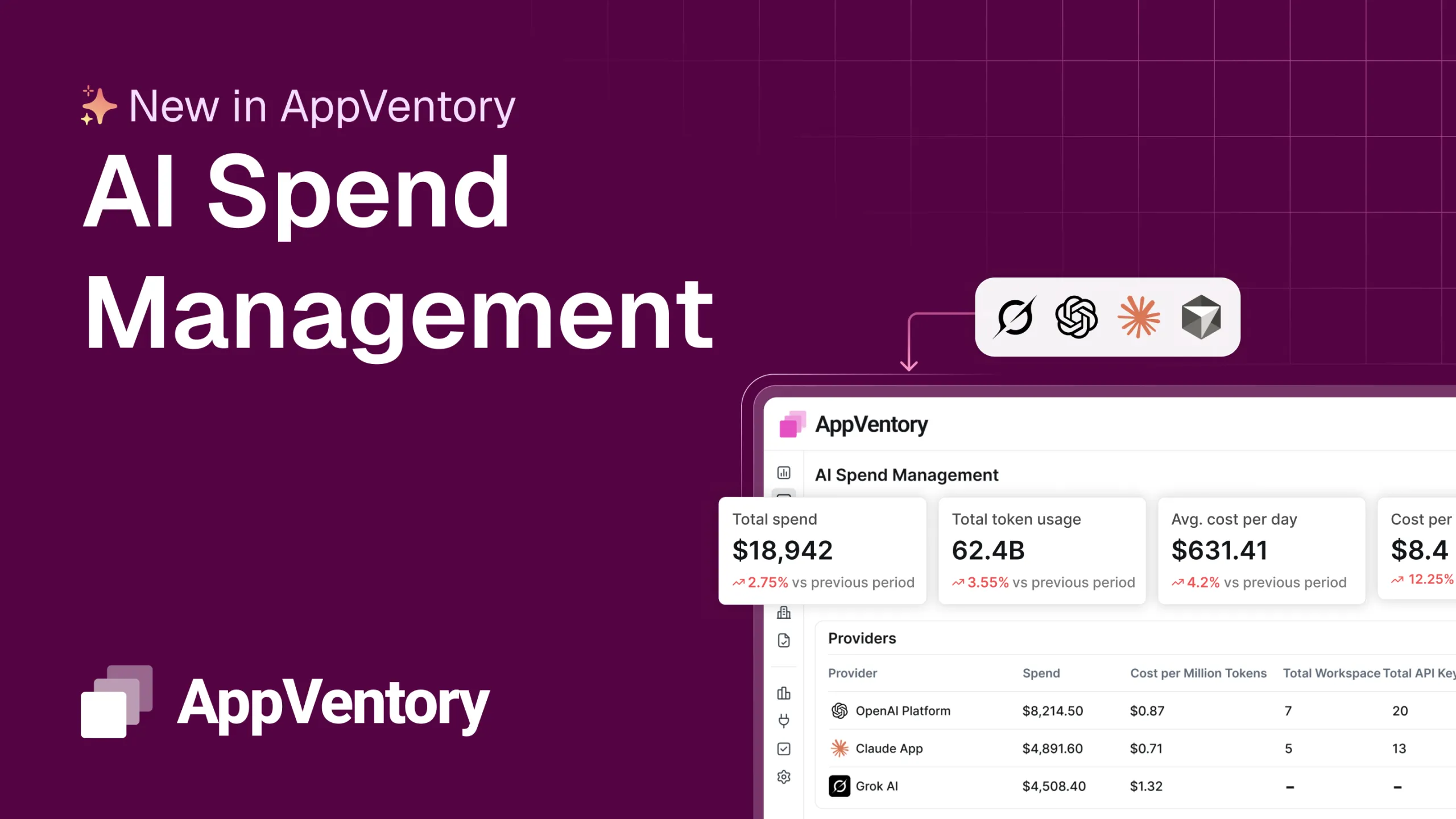
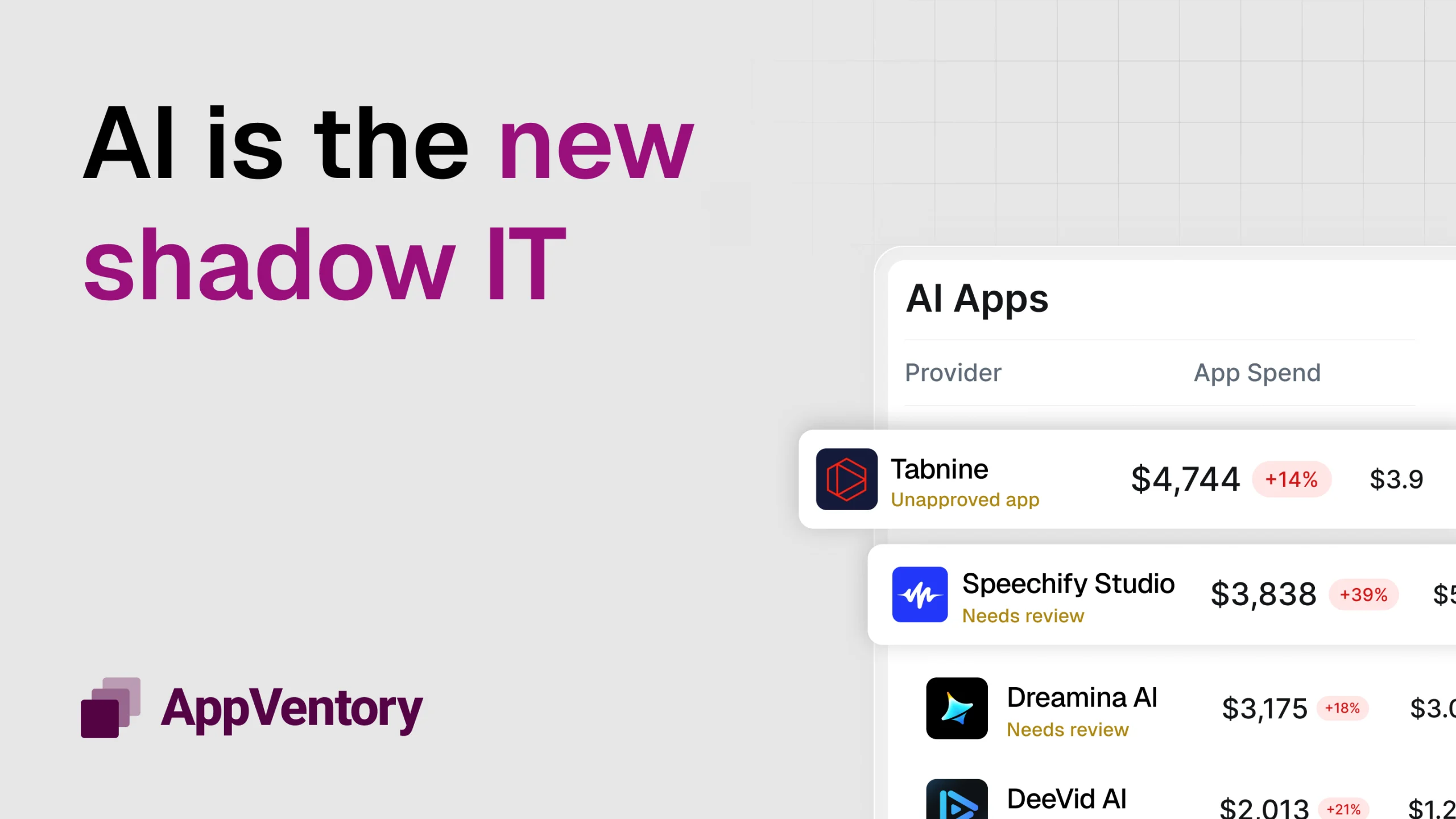
- Untracked AI tools. New AI subscriptions added by individuals, outside any approval process.
None of these are hard to fix once they’re visible. The problem is that nobody is looking.
Why your firm is best placed to fix it
You have three advantages no software vendor or IT consultant has.
- You already have the data. Transactions and invoices show every subscription, its cost and its billing cycle.
- You already have the trust. Clients act on your recommendations about money.
- You already have the meetings. Month-end, quarter-end and year-end reviews are the natural place for a software conversation.
Add those together and a software review stops being a favour. It becomes a service with a clear deliverable: here’s what you pay for, here’s what you can cut, here’s what renews next.
How it works: A worked example
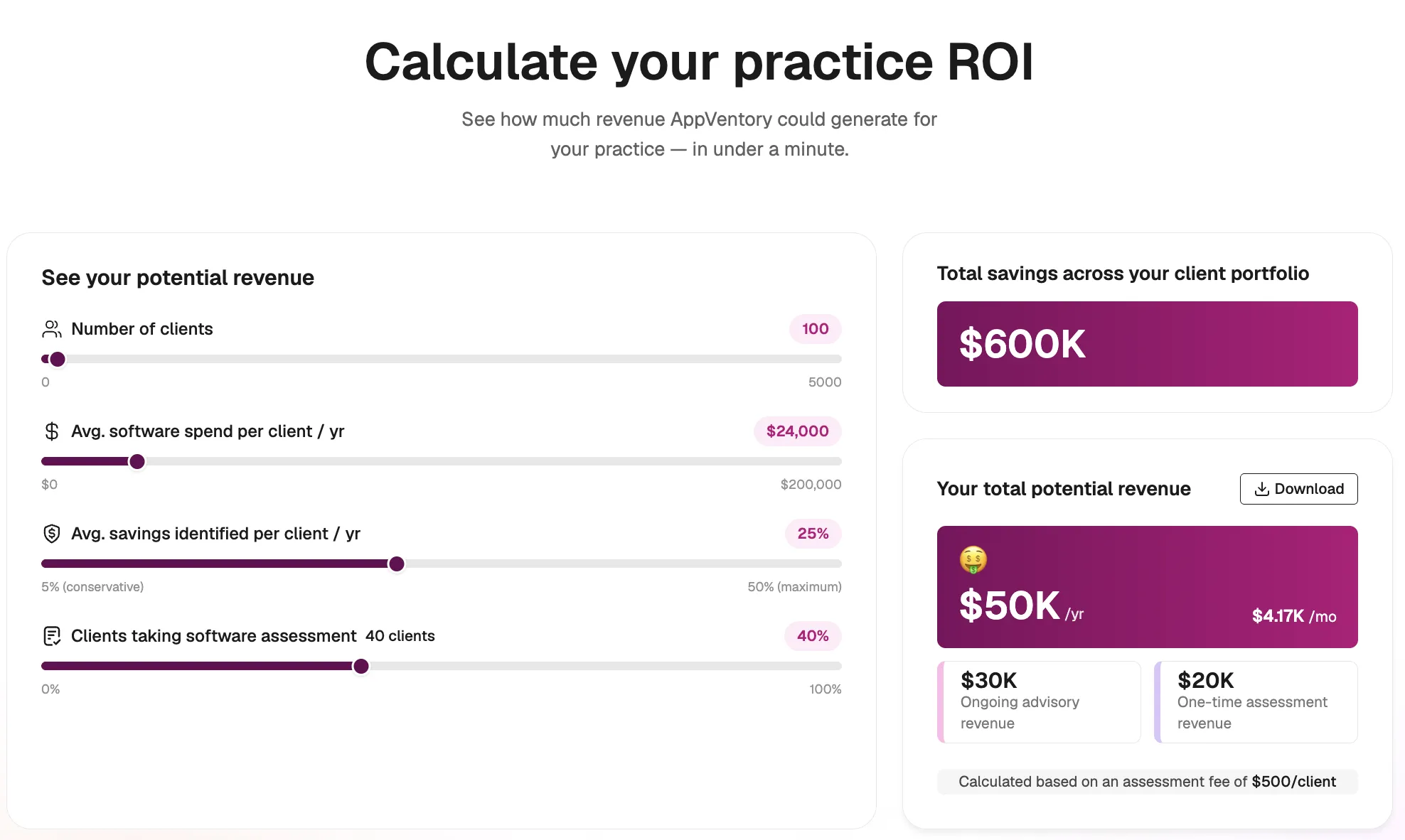
Take a practice with 100 clients. The AppVentory ROI calculator starts with these inputs:
| Input | Starting value |
|---|---|
| Number of clients | 100 |
| Average software spend per client, per year | $24,000 |
| Savings identified per client | 25% |
| Clients who take a software assessment | 40% (40 clients) |
| Assessment fee per client | $500 |
With those inputs, the calculator shows:
- $600K in total savings identified across the client portfolio
- $20K in one-time assessment revenue (40 assessments at $500)
- $30K in ongoing advisory revenue
- $50K a year in total potential revenue for the firm, or about $4.17K a month
These are illustrative starting values, not a benchmark. A firm with fewer clients, lower spend or a more conservative savings rate will see a smaller number. A firm with larger clients will see a bigger one. Which is exactly why it’s worth running your own.
See what your client book is worth Four inputs. Under a minute. A downloadable breakdown of your advisory and assessment revenue. Calculate your practice ROI →
How to turn it into a service
You don’t need a new department. Most firms start small and build from there.
- Pick five clients. Choose ones with growing teams or rising software costs.
- Run a one-time software assessment. Map every subscription, flag unused seats and duplicates, and list upcoming renewals. Charge a fixed fee.
- Present a savings report. Show the client what they can cut and what it’s worth over twelve months.
- Offer ongoing review. Track renewals, review new tools and report savings each quarter, on a monthly retainer.
The assessment proves the value. The ongoing review is where the recurring revenue sits.
The cost of waiting
Every renewal date that passes without a review locks a client into another year of the same spend. Every month without a software conversation is a month another advisor could start one.
The firms that move first won’t just add a revenue line. They’ll become the adviser their clients call before they buy any new tool.
Is your firm leaving money on the table? Find out in under a minute with the AppVentory ROI calculator. Calculate your practice ROI → Prefer to talk it through? Book a 20-minute demo and we’ll go through your numbers with you.