Ask most finance teams what they spend on AI and you’ll get a number. It’s almost always too low.
The gap isn’t because anyone is hiding anything. AI never arrives as a single purchase that someone signs off on. It shows up in pieces: a seat here, an add-on there, a usage charge somewhere else. Each piece is small enough to go unnoticed, and almost none of them are labelled “AI” on a report.
So when leadership asks “What are we spending on AI?”, the honest answer is usually “We don’t fully know.” That’s the problem worth solving first, before anyone argues about whether the spend is worth it.
Four places AI spend hides
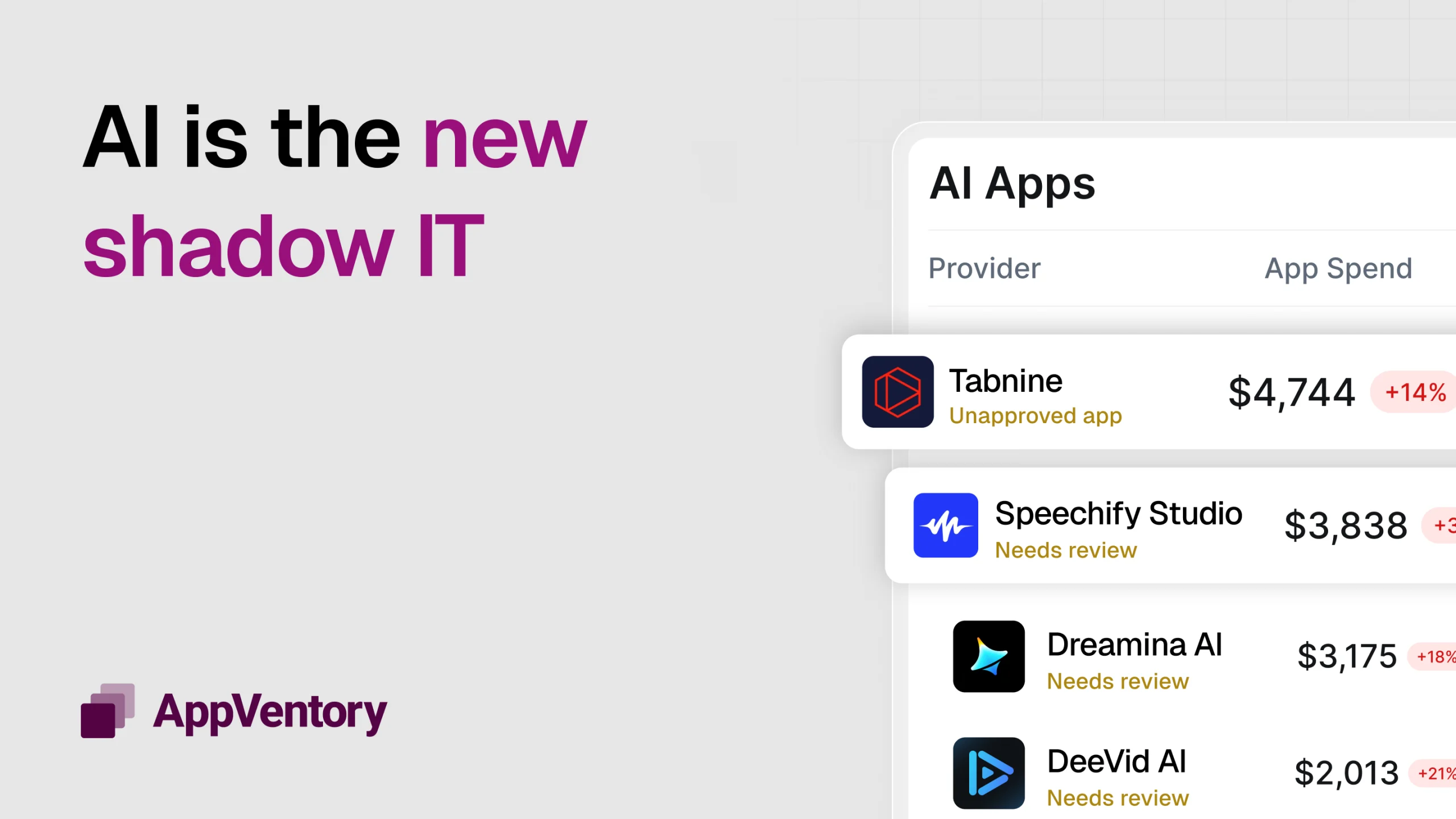
1. Seats bought on someone’s card. An employee needs an AI assistant to get through a deadline, puts a subscription on a company or personal card, and expenses it. It works, so they keep it. A few months later, several people across teams are doing the same thing, and none of it shows up in your software list.
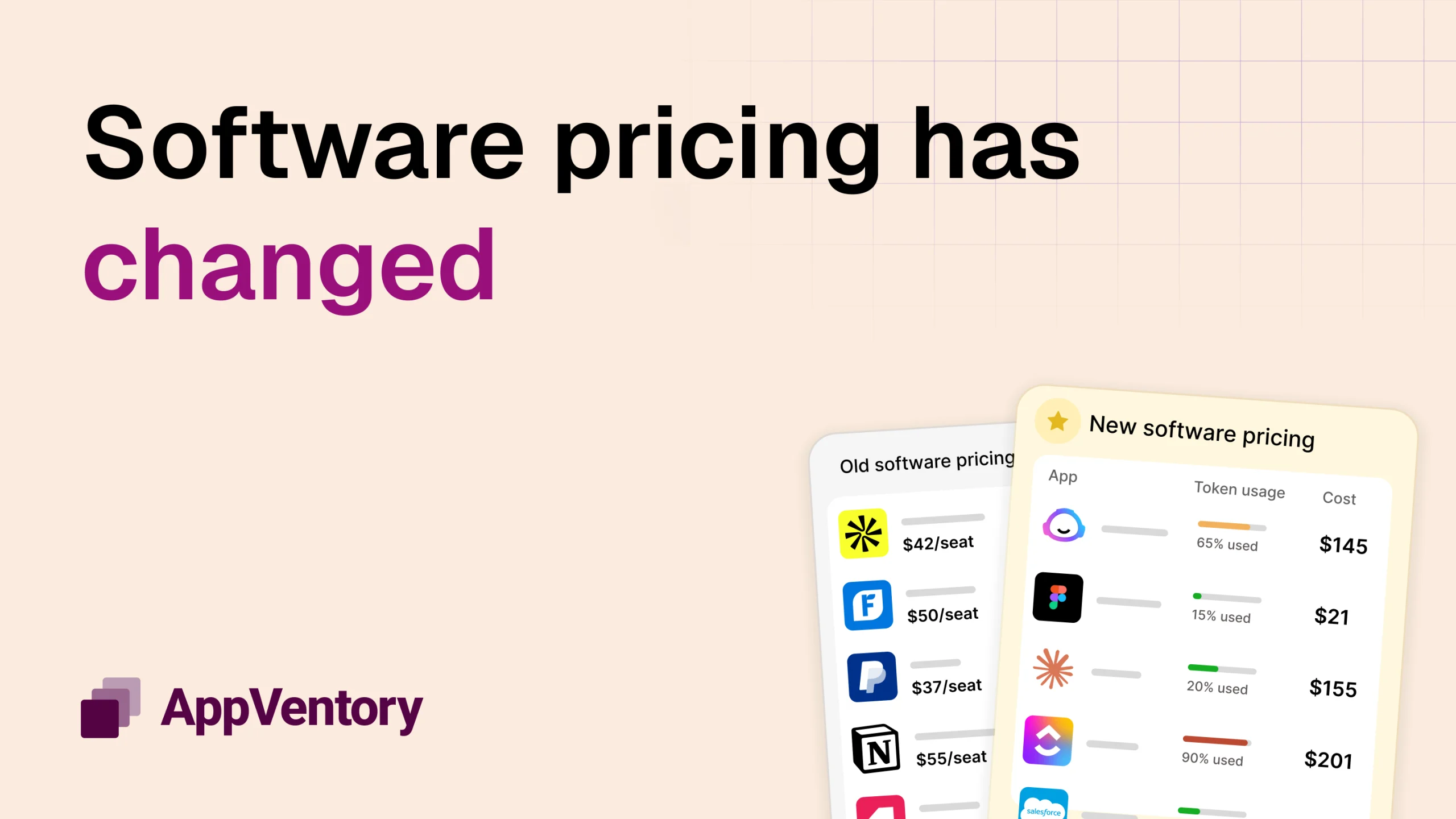
2. AI add-ons bundled into renewals. Tools you already pay for are adding AI features, often as paid add-ons or higher tiers. When the renewal comes in, the AI portion is folded into a bigger number. The line item says “CRM” or “productivity suite,” not “AI.”
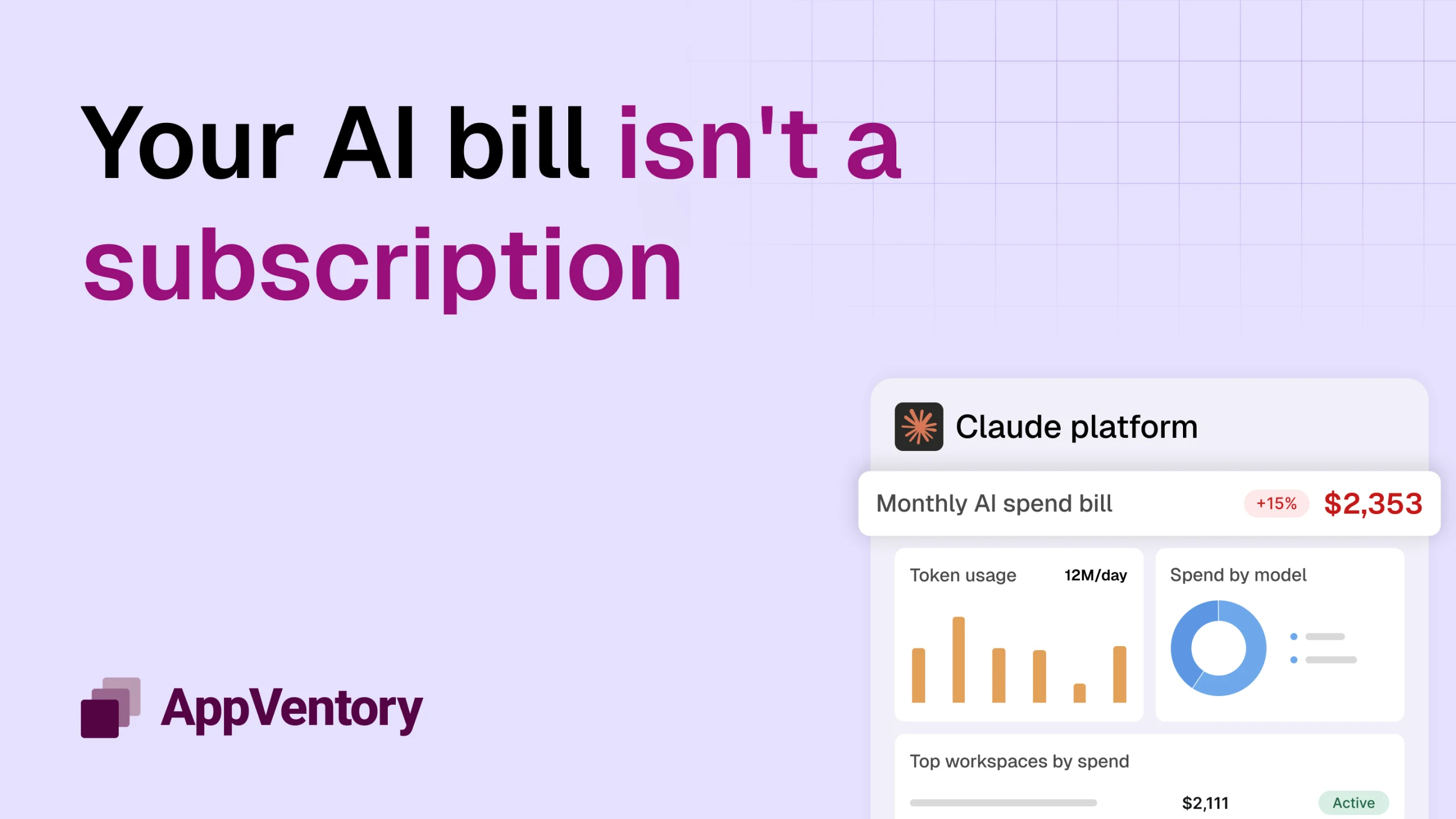
3. Usage-based charges. Some AI is billed by consumption: credits, tokens or API calls. A developer sets up a key to test an idea, and the bill grows with usage instead of headcount. Usage-based costs don’t behave like a fixed subscription, so they’re easy to miss until they aren’t.
4. Overlapping assistants. Marketing picks one AI writing tool, sales picks another, and product uses a third. Each team made a sensible choice on its own. Together, the business pays several times for tools that do much the same job. Overlapping assistants are the new duplicate subscriptions.
The problem isn’t cost, it’s visibility
It’s tempting to frame AI spend as a question of whether AI is too expensive. That’s the wrong starting point. The real risk is that the spend is scattered, nobody owns it, and it grows faster than anyone tracks it.
That causes three practical problems:
- You can’t judge value. If you don’t know what you’re paying for, you can’t tell which tools are earning their place.
- You can’t plan. Usage-based costs and mid-year add-ons make next quarter’s budget a guess.
- You can’t control risk. Every AI tool someone signs up for is a tool handling company information. If finance and IT don’t know it exists, they can’t check how it’s being used.
None of this means cutting AI. It means knowing what you have, so AI becomes a decision you make on purpose instead of a cost that drifts.
Three questions to start with
You don’t need a big programme to get a handle on AI spend. You need clear answers to three questions.
- What AI are we actually paying for? List standalone AI tools, then go through the software you already own and note which plans include AI features or add-ons. Include anything paid on cards or through expenses.
- Who is using it, and how much? A seat count tells you what you bought, not what’s being used. Look at who actually uses each tool and how often before deciding it’s worth keeping.
- Where are we paying twice? Group tools by the job they do. Where several teams pay for tools that do the same thing, decide which one to standardise on.
The first answer gives you the full picture. The second tells you what’s earning its place. The third shows you where to consolidate.
Make AI spend something you manage
AI spend will keep growing as more of your tools add AI and more of your team relies on it. That’s fine, as long as you can see it.
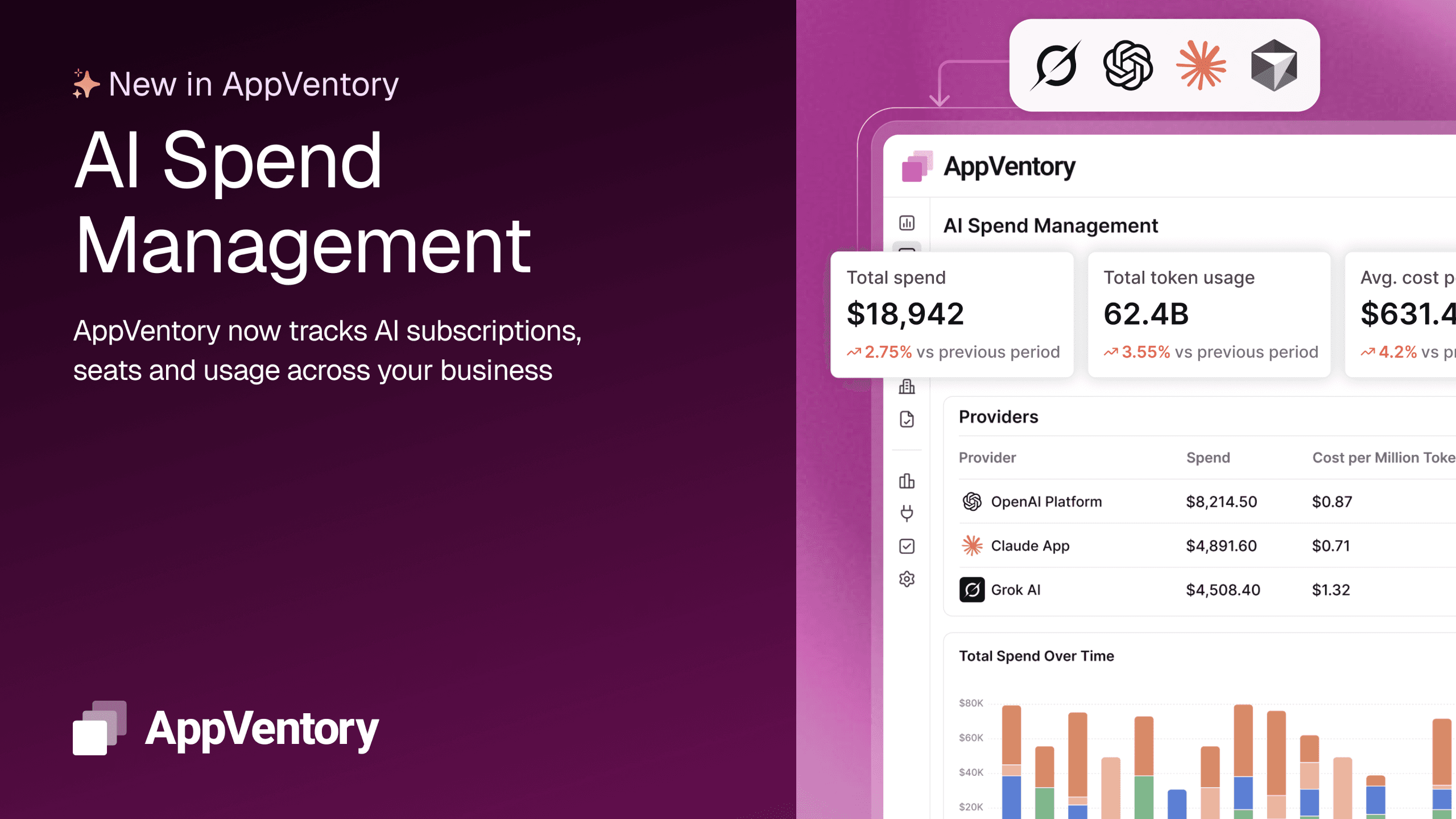
AppVentory manages software and AI spend in one place, and AI Spend Management is built to help businesses answer these three questions. Instead of hunting through card statements and renewal invoices, you get one view of the AI you’re paying for, who’s using it, and where it overlaps.
Learn more about AI Spend Management. Book a free call with the team today.