
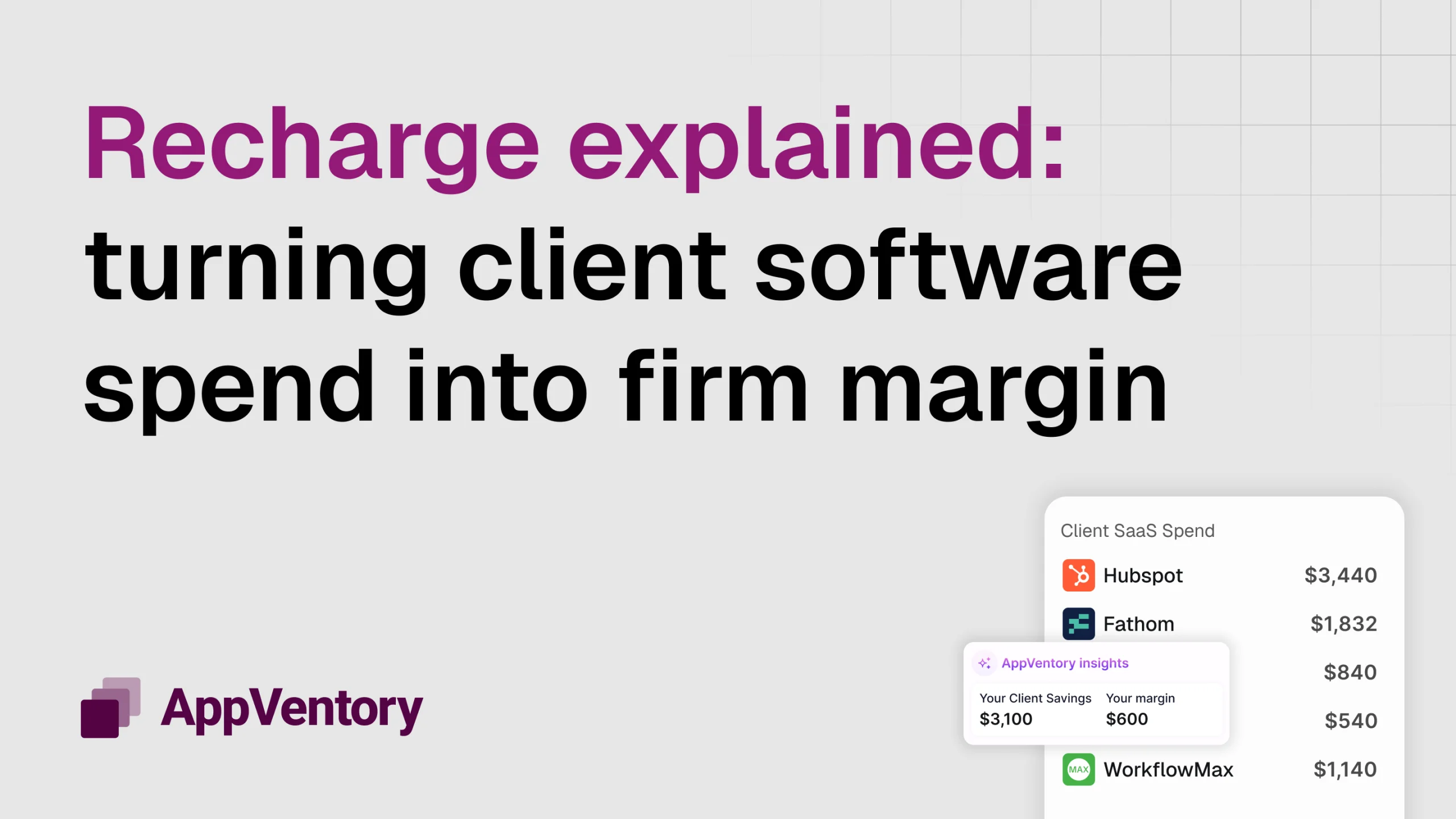
Your client is paying for eleven software tools they don’t use, and you already know it. You saw it during the last reconciliation but didn’t say anything — flagging it meant an hour of unbillable digging. That silent knowledge is exactly where recharge turns into margin, if you build the report instead of just noticing the waste.
The problem: you see the waste, but you can’t monetise it
Every accountant and bookkeeper who touches a client’s books eventually spots the same pattern: subscriptions nobody cancelled, seats nobody’s using, a renewal that auto-charged again last month. You notice it because you’re already in the numbers. What you don’t have is a repeatable way to turn that noticing into a client-ready report you can put your name on and bill for.
So the insight stays informal — a comment on a call — instead of becoming a line item. Meanwhile, the client keeps paying full price for a stack nobody’s reviewed since it was set up, and you keep doing free advisory work you could be charging for.
This isn’t a knowledge gap. You already understand the client’s spend better than they do. It’s a packaging gap: no format, no cadence, no easy way to turn “I noticed this” into “here’s your quarterly software spend report” with your firm’s name on the cover.
Recharge needs a system, not a spreadsheet
Recharging client costs back with a margin on top is standard practice for expenses — but software spend rarely gets the same treatment, because it’s genuinely harder to track. A client’s tools live across a dozen vendor logins, most of which you don’t have access to. Seat counts change monthly. AI subscriptions get added by whoever signed up for a free trial and never look back.
Building this manually — logging into each platform, cross-referencing invoices, estimating usage — takes hours per client, per quarter. That math doesn’t work for anyone but your largest accounts, so most firms skip it entirely and stick to the annual spreadsheet review nobody looks forward to.
The result is a missed service line, not a missed opportunity you never saw. You know the advisory value is there. What’s missing is a way to produce it at a cost per client that actually clears a margin once your time is priced in.
AI tools make this worse. A client’s marketing lead signs up for one AI writing tool, their ops person adds another, and neither shows up until the card statement does — by which point three overlapping subscriptions have been renewing quietly for months. None of this is the client hiding anything; it’s just spend moving faster than any one person can watch by hand.
A report that’s yours to bill for
The fix isn’t finding more hours in the week — it’s removing the manual work from the report entirely, so what’s left is your judgement, not your data entry.
AppVentory discovers every app, licence, and subscription across a client’s business from day one, mapped automatically rather than reconstructed from logins and invoices. Usage gets read down to the seat and, for AI tools, the token and model level — so the report doesn’t just say “here’s what you’re paying,” it says exactly who’s using what, and what’s sitting idle. Every finding comes with a clear next step the client approves or dismisses; you’re not guessing at recommendations, you’re presenting ones already scored.
The part that turns this into recharge is the delivery: the report goes out white-labelled, under your firm’s brand, not AppVentory’s. Your client sees your name on a document that just found them real, specific savings — a renewal three weeks out, four idle seats on a design tool, an AI subscription nobody remembers approving. That’s the moment the conversation shifts from “here’s your invoice” to “here’s what we found you, and here’s what this service costs going forward.”
That shift only works if it’s repeatable across your whole client list, not just the account you had time to dig into manually. Because discovery and scoring run automatically, the marginal cost of a second client’s report — or a tenth — is close to zero once the first is set up. It’s SOC 2 certified, so client data stays protected without you vouching for a new vendor’s security. That’s what makes the margin real: your price per client stays fixed while your cost per client keeps falling.
Concrete steps to start recharging software spend
You don’t need a platform to start building this service line:
- Pick three clients to pilot with. Start with accounts where you already suspect there’s waste — you’ll have a finding fast, which makes the pitch to the next client easier.
- Set a fixed report cadence. Quarterly works for most; it’s frequent enough to catch renewals before they hit, infrequent enough to stay profitable on your time.
- Price it as a line item, not a favour. Decide your fee before the first report goes out — retroactively trying to charge for something you’ve been doing for free is a much harder conversation.
- Lead with the number, not the process. Clients don’t care how you found four idle seats; they care that you found four idle seats. Keep the report short and dollar-focused.
- Track renewals separately from waste. A renewal 60 days out is a different conversation — and a different urgency — than a subscription that’s been idle for a year.
The payoff
Recharge only works when the report is cheap enough to produce that the margin is real. Once discovery and scoring happen automatically, the insight you’d otherwise mention in passing on a call becomes a billable line your clients ask for by name every quarter.