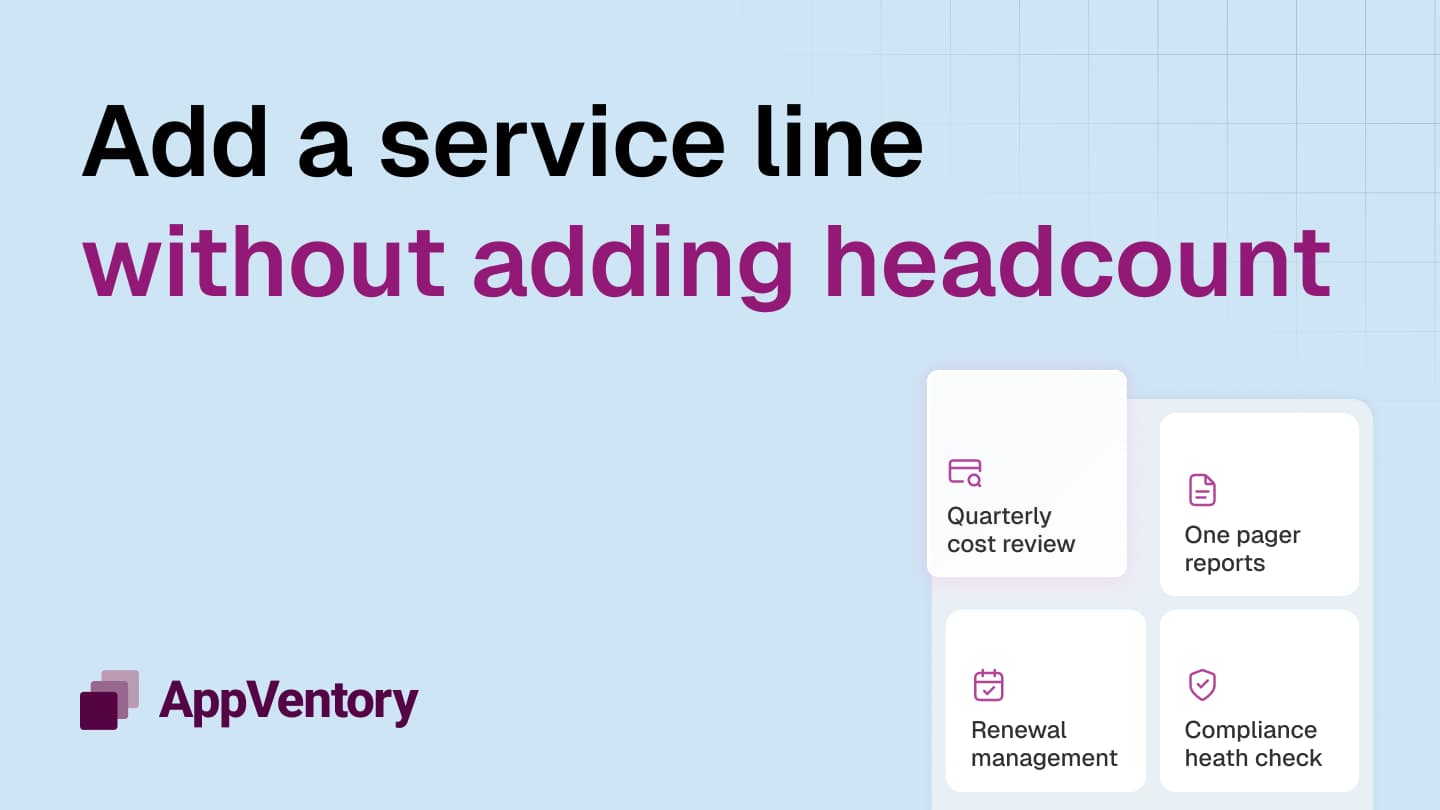
Every partner who has looked at technology advisory has run the same arithmetic and stopped at the same place.
Adding a service line without adding headcount — where the labour actually goes
Every firm that has considered technology advisory has stalled at the same sentence.
Who would actually do the work?
It’s the right question. It just tends to get answered with an assumption rather than an analysis — the assumption being that a new service line needs a new hire, and a new hire means salary committed against revenue that doesn’t exist yet.
Framed that way, waiting is the sensible call. Firms have been sensibly waiting for about three years.
So it’s worth opening up the work and looking at what’s actually inside it.
What the work is made of
A technology review breaks into four jobs. They look like one job. They aren’t.
Gathering. Finding out what the client runs. Every subscription, seat, renewal date and price — across their accounting software, their card feeds, and whatever staff signed up for on their own. This is the biggest chunk by hours. It’s also entirely mechanical.
Analysing. Comparing what they pay against what they use. Duplicate tools. Licences for people who left. The plan that renewed at a higher tier. Two departments buying the same thing. Also mechanical — pattern-matching, not judgement.
Judging. Deciding what matters for this client. A duplicate tool might be deliberate. An expensive licence might be load-bearing. A cheap subscription might be the one carrying compliance risk. This needs someone who knows the business.
Delivering. Sitting with the client, walking them through it, handling the pushback, agreeing what happens next. This is the relationship. It’s the reason they’d pay you and not a software vendor.
The first two are volume with no judgement in them. The last two are judgement with almost no volume.
Where the hours actually sit
If you’ve done one of these by hand, you know the split. Gathering and analysis take days. The judgement takes an hour. The client conversation takes an hour.
That ratio is why manual reviews don’t scale. It’s also why firms conclude they need to hire.
And the conclusion is sound, given the inputs. If four-fifths of the effort is data collection, then doing this across a whole client portfolio really would consume a full-time person.
But nobody is proposing you hire someone to exercise judgement on your behalf. The hypothetical hire exists to absorb the gathering and the analysis.
Which means the firm is contemplating a salary to solve a data problem.
That’s the arithmetic worth redoing. Not can we afford someone to run this service, but what does this service cost if the volume work isn’t done by a person?
What changes when the volume work is automated
Connect the client’s accounting stack and card feeds, and the gathering stops being work. Every subscription, cost and renewal date is already there — assembled continuously, not reconstructed once a year.
The analysis follows. Usage patterns, duplicate functionality, idle licences, price changes since last renewal. These are comparisons, and comparisons are what software is for.
What reaches your desk is a prepared position. Findings, ranked, with the numbers attached.
Your work starts at the judgement step. Review what’s been surfaced. Discard what doesn’t apply to this client. Decide what’s worth raising. Then have the conversation.
An hour of partner time. Maybe two on a complicated client.
That’s the real labour cost of the service line. Not a headcount — two hours per client per review, from someone who already knows the client, using preparation they didn’t have to produce.
The honest version of what it does require
This isn’t free, and the pitch is weaker if it pretends otherwise. Three things have to come from the firm.
Someone has to own it. Not full-time, but named. A service line with no owner becomes a thing everyone assumes someone else is running — which is how good initiatives quietly die in professional services firms.
Someone has to make the calls. The judgement layer can’t go to software or to a junior. Telling a client to drop a tool, renegotiate a renewal, or leave both alone is advisory work. It needs someone who can defend the recommendation in the room.
You have to decide how it’s priced. Bundled into the retainer, billed as a standalone review, or taken as a share of the savings found. Each works. Each suits a different client mix. The decision needs making before the first review, not after.
Those are real requirements. None of them is a salary.
What it looks like across a portfolio
The economics only get interesting at volume — and volume is exactly where the manual version breaks.
Take forty clients, reviewed quarterly, at two hours each. That’s eighty hours a quarter: roughly a day a week, spread across whoever owns it, against a service line billing at advisory rates. The same eighty hours spent on data collection would never carry that.
And the second review costs less than the first. The stack is already mapped. The baseline exists. What you’re reviewing is the delta — what changed, what renewed, what got added.
The work gets cheaper as the revenue compounds.
The decision in front of you
Technology advisory was never the question. Your clients’ software spend is growing, nobody is managing it, and someone is going to have that conversation with them.
The question was whether delivering it meant building a function first. It doesn’t.
You already have the client relationships. You already have the financial visibility. The only thing standing between you and the service line was a week of data collection per client — and that was never work a person needed to do.
AppVentory maps every client’s software stack continuously, surfaces the savings and risks, and hands you a prepared position for every review. Book a demo.
Then someone asks who would do the work, and the conversation ends.
That’s the right question. It’s just usually answered with an assumption rather than an analysis — the assumption being that a new service line means a new hire, and a new hire at this stage means committing salary against revenue that doesn’t exist yet. Framed that way, waiting is the sensible call, and firms have been sensibly waiting for about three years now.
So it’s worth actually opening up the work and looking at what’s inside it.
What the work is made of
A technology review for a client breaks into four distinct jobs, and they have very different labour profiles.
Gathering. Finding out what the client actually runs. Every subscription, every seat, every renewal date, every price, across accounting software, card feeds, and whatever staff have signed up for independently. This is the largest single chunk of the work by hours, and it’s almost entirely mechanical.
Analysing. Comparing what they’re paying against what they’re using. Spotting the duplicate tools, the licences assigned to people who left, the plan that renewed at a higher tier, the two departments paying for the same thing. Also mechanical — it’s pattern-matching against usage data, not judgement.
Judging. Deciding what actually matters for this client. A duplicate tool might be deliberate. An expensive licence might be load-bearing. A cheap subscription might be the one carrying compliance risk. This requires knowing the business, and it cannot be systematised.
Delivering. Sitting with the client, walking them through it, handling the pushback, agreeing what happens next. This is the relationship, and it’s the reason they’d pay you rather than a software vendor.
The instinct is to treat these as one job requiring one person. They aren’t. The first two are volume work with no judgement in them. The second two are judgement work with very little volume.
Where the hours actually sit
If you’ve done one of these manually, you know the split. The gathering and analysis take days. The judgement takes an hour. The client conversation takes an hour.
That ratio is why manual technology reviews don’t scale, and it’s also why firms conclude they need a hire. They’re extrapolating from a process where 80% of the effort is data collection, and correctly concluding that doing this across forty clients would consume a full-time person.
But nobody is arguing you should hire someone to do judgement work. The hypothetical hire exists to absorb the gathering and the analysis — which is to say, the firm is contemplating a salary to solve a data problem.
That’s the arithmetic worth redoing. Not “can we afford someone to run this service,” but “what does this service cost us if the volume work isn’t done by a person?”
What changes when the volume work is automated
Connect the client’s accounting stack and card feeds and the gathering stops being work. Every subscription, cost, and renewal date is already there — assembled continuously rather than reconstructed once a year.
The analysis follows. Usage patterns, duplicate functionality, idle licences, price changes since last renewal: these are comparisons, and comparisons are what software is for.
What lands on your desk is a prepared position. Findings, ranked, with the numbers attached. Your work starts at the judgement step — reviewing what’s been surfaced, discarding what doesn’t apply to this client, deciding what’s worth raising — and then the client conversation.
An hour of partner time. Maybe two on a complicated client.
That’s the actual labour cost of the service line. Not a headcount. Two hours per client per review, applied by someone who already knows the client, using preparation they didn’t have to produce.
The honest version of what it does require
This isn’t free, and the pitch would be weaker if it pretended otherwise. Three things do need to come from the firm.
Someone has to own it. Not full-time, but named. A service line with no owner becomes a thing everyone assumes someone else is running, which is how good initiatives quietly die in professional services firms. One person, accountable for the cadence, even if it’s a fraction of their week.
Someone has to make the calls. The judgement layer can’t be delegated to software or to a junior. Deciding that a client should drop a tool, or renegotiate a renewal, or shouldn’t touch either — that’s advisory work, and it needs someone who can defend the recommendation in the room.
You have to decide how it’s priced. Bundled into the existing retainer, billed as a standalone review, or taken as a share of the savings found. Each works, each suits a different client mix, and the decision needs making before the first review rather than after.
Those are real requirements. None of them is a salary.
What it looks like across a portfolio
The economics only get interesting at volume, and volume is where the manual version breaks entirely.
Forty clients, reviewed quarterly, at two hours of partner time each: eighty hours a quarter. Roughly a day a week, spread across whoever owns it, against a service line billing at advisory rates. That maths works in a way that the same eighty hours spent on data collection never could.
And the second review costs less than the first. The stack is already mapped, the baseline exists, and what you’re reviewing is the delta — what changed, what renewed, what got added. The work compounds downward while the revenue compounds up.
The decision in front of you
The question was never whether technology advisory is worth selling. Your clients’ software spend is growing, nobody is managing it, and someone is going to have that conversation with them.
The question was whether it required building a function to deliver it. It doesn’t — it requires removing the part of the work that made it look like it did.
You already have the client relationships. You already have the financial visibility. What you were missing was a way to do the preparation without paying someone to do it by hand.
AppVentory maps every client’s software stack continuously, surfaces the savings and risks, and hands you a prepared position for every review. Book a demo.